
Jack L. B. Gohn
Writer, Critic & Playwright
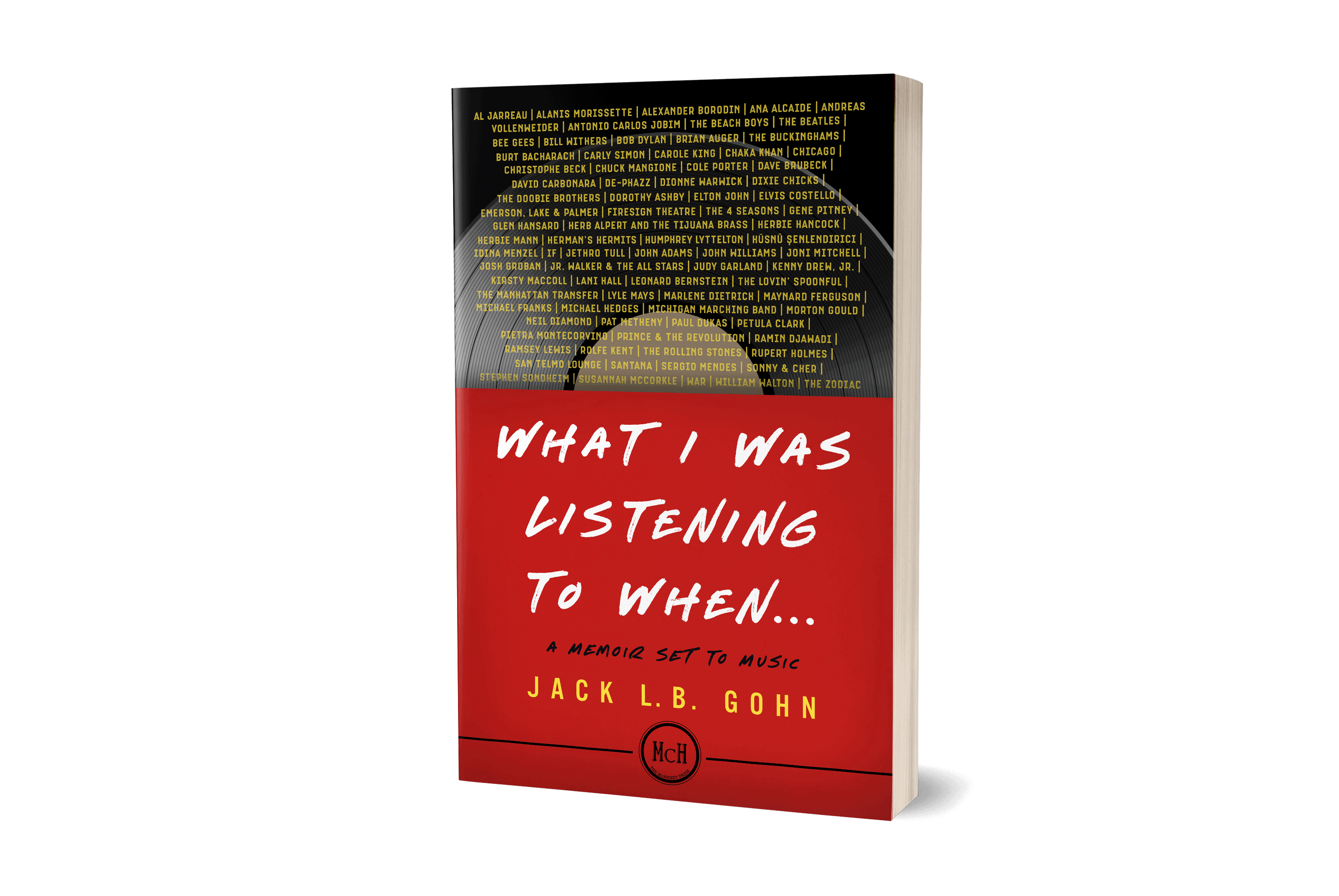
New Book!
What I Was Listening to When . . .
A Memoir Set to Music

Jack L. B. Gohn
Writer, Critic & Playwright
Though I practiced law for over a third of a century,
I have been a writer from childhood.
And even with a full-time practice, I never really stopped publishing in various papers, magazines and journals. I was bound to reach a point eventually of deciding I wanted to be a writer and nothing else. This website features three things I do now that the point has been reached. I review theater, write plays, and for a decade and a half, wrote a column commenting on law and policy. Common to all these pursuits is a commitment to fact and principles. You can’t run a society or write a play (or about one) well without candor, consistency, and a sense of humaneness and decency. Embodied in these pages is the history of my efforts in each of these pursuits.
Plays by Jack Gohn
I largely write about lawyers, but these are not conventional lawyer dramas. There’s a story of how legal careers begin, another about how they (and others) end. There’s a ghost story. There’s a thriller that does not include a single courtroom scene. And, moving away from my former profession, there’s a play about God – maybe told from God’s perspective, maybe not. And there will be more.
Theater Reviews & Commentary
Most Recent Post
Women’s Work(s)
Each of these shows reinforces, then, the regard specifically female art and artists deserve. It might seem elementary and unnecessary (even patronizing) for these points to be made at this late date, but if they are being stated with such repetition on Broadway right now, it tells us something about contemporary audiences. Particularly when the points are being made by largely or exclusively female creative teams who may be pardoned a bit of an agenda, it would seem that a marker is being laid down. Parity of esteem is being freshly claimed. These works demonstrate that we will all be better off as the claim is more consistently honored.
Theater Reviews & Commentary
Most Recent Post
Women’s Work(s)
Each of these shows reinforces, then, the regard specifically female art and artists deserve. It might seem elementary and unnecessary (even patronizing) for these points to be made at this late date, but if they are being stated with such repetition on Broadway right now, it tells us something about contemporary audiences. Particularly when the points are being made by largely or exclusively female creative teams who may be pardoned a bit of an agenda, it would seem that a marker is being laid down. Parity of esteem is being freshly claimed. These works demonstrate that we will all be better off as the claim is more consistently honored.