
Jack L. B. Gohn
Writer, Critic & Playwright
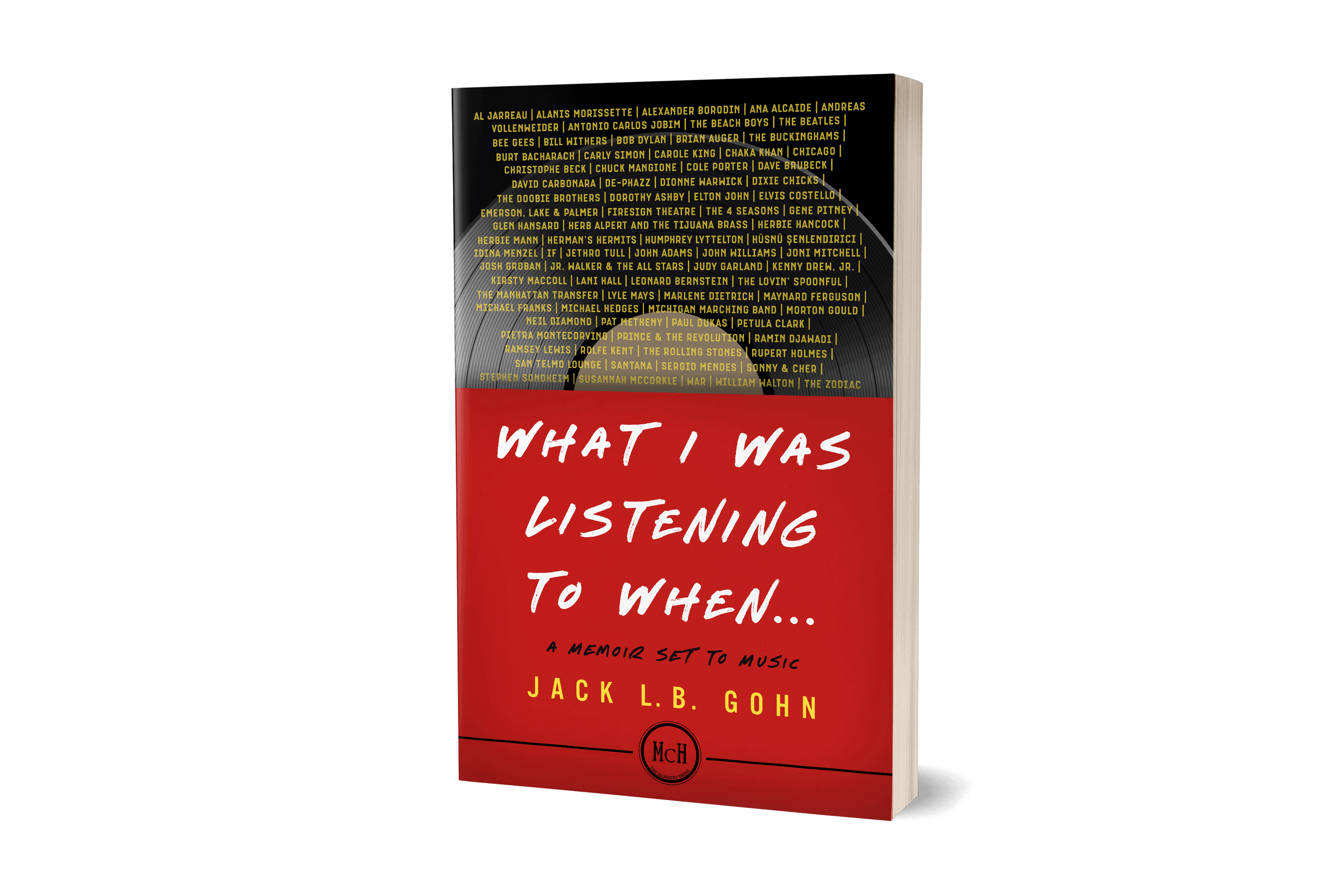
New Book!
What I Was Listening to When . . .
A Memoir Set to Music

Jack L. B. Gohn
Writer, Critic & Playwright
Though I practiced law for over a third of a century,
I have been a writer from childhood.
And even with a full-time practice, I never really stopped publishing in various papers, magazines and journals. I was bound to reach a point eventually of deciding I wanted to be a writer and nothing else. This website features three things I do now that the point has been reached. I review theater, write plays, and for a decade and a half, wrote a column commenting on law and policy. Common to all these pursuits is a commitment to fact and principles. You can’t run a society or write a play (or about one) well without candor, consistency, and a sense of humaneness and decency. Embodied in these pages is the history of my efforts in each of these pursuits.
Plays by Jack Gohn
I largely write about lawyers, but these are not conventional lawyer dramas. There’s a story of how legal careers begin, another about how they (and others) end. There’s a ghost story. There’s a thriller that does not include a single courtroom scene. And, moving away from my former profession, there’s a play about God – maybe told from God’s perspective, maybe not. And there will be more.
Theater Reviews & Commentary
Most Recent Post

A Mad Men-Themed Temperamentals at REP Stage
AS the play shows, even if the personal is political, personal trajectories and political ones can diverge. The sundering of Mattachine’s founders from the Society, and then from each other, is deftly rendered, along with the disagreements, persisting to this day, between those who embrace queer culture and wish to stay somewhat aloof from the straight world and assimilationists who view homosexuals as another marginalized minority that must strive for acceptance and integration. In short, this is a big play, with big themes.
Theater Reviews & Commentary
Most Recent Post
A Mad Men-Themed Temperamentals at REP Stage
AS the play shows, even if the personal is political, personal trajectories and political ones can diverge. The sundering of Mattachine’s founders from the Society, and then from each other, is deftly rendered, along with the disagreements, persisting to this day, between those who embrace queer culture and wish to stay somewhat aloof from the straight world and assimilationists who view homosexuals as another marginalized minority that must strive for acceptance and integration. In short, this is a big play, with big themes.